Divorcing before your green card interview can make the green card process more challenging. Your rights depend on where you are in the process and the circumstances surrounding your application and divorce. Below is one of our most frequently asked questions about immigration and divorce. When you hire Odunlami Law, our experienced attorneys review your case and provide guidance for your specific situation.
As a New Jersey divorce and immigration lawyer, Odunlami Law can help you navigate the process. Our legal team will break down the details of your situation and offer viable solutions. Request a consultation now.
What Is a Green Card Interview?
U.S. Citizenship and Immigration Services (USCIS) requires a face-to-face meeting for most applicant applying for permanent residency. The USCIS officer verifies the information to ensure your submitted paperwork matches your verbal answers.
A component of the green card interview is an evaluation of your relationships. If you are seeking a green card on a marriage basis, these questions surround your marriage. Officers want to ensure you entered the marriage in good faith, not solely for immigration purposes.
The green card interview happens after you file your application. The process of scheduling an interview can take 8 to 24 months after that date. A lot can change. You may feel that the marriage is not the right decision and wish to divorce.
Marriage-Based Applications Are Denied
If you finalize your divorce before your green card interview, you most likely will be unable to complete the process. Your application is canceled or denied.
In these cases, your immigration application is no longer valid. The USCIS requires that you have a legal, valid, and existing marriage at the time of adjudication. After the divorce decree occurs, that underlying requirement cannot be met. USCIS will cancel your scheduled interview. Or, they may deny the Form I-485 shortly after learning about your divorce.
This means that USCIS cannot approve the following:
- Form I-130 filed by the former spouse
- Form I-485 based on the marriage only
- Immigration visa applications based on the marriage
That means you typically need to seek a green card through other means or obtain qualifications through other means.
It is important to notify USCIS that you and your spouse are divorcing or have divorced. Request to withdraw the petition. You do not want the appearance of misrepresentation. We also recommend speaking to an immigration attorney at this point. Doing so provides you with the greatest insight into your rights during this very difficult time. Before you make any decision, speak to us about your options. Violations of the Immigration and Nationality Act can come with steep consequences.
Alternatives to a Marriage-Based Green Card
One of the conversations our immigration and divorce attorney will have with you is about alternatives to a marriage-based green card you may qualify for based on your situation. In short, we are looking for other ways to help you obtain a green card and remain in the U.S. on an ongoing basis. Some examples include:
- Immediate relatives of U.S. citizens: If you are the parents of adult U.S. citizens, you may be able to apply directly. Other family opportunities may also exist.
- Asylum or refugee status: Some people may seek asylum if they fled their home country due to persecution or a well-founded fear of persecution based on political opinion, nationality, race, religion, or membership in a particular social group.
- Abuse or extreme cruelty: In some situations, you may seek a green card based on this marriage through the Violence Against Women Act (VAWA). This must be done within two years of the divorce. It applies in situations where you are abused or face extreme cruelty by the U.S. citizen or the other permanent resident spouse. This is a self-petition for a green card. Contact us to learn more about VAWA and your rights.
In each of these situations, our attorney will review your qualifications to determine to what extent you may be able to move your green card application forward. However, it is very important to know that limitations apply. Avoid dishonesty or misrepresentation during this process.
“Divorce can change the path of an immigration case, but it does not always end the journey. The most important step is to understand your options before you file, withdraw documents, miss a deadline, or make a decision that may be difficult to correct.”
– Ifeoma Odunlami, Founder and Principal Attorney, Odunlami Law
Speak to an Immigration and Divorce Attorney Now
Odunlami Law represents people in all 50 states seeking help with the immigration process, including divorce matters. Request a consultation with our immigration and divorce attorney now to learn more about your rights.
Call (973) 993-1900 for a consultation.
FAQs About Divorce, USCIS and Green Card Interviews
How will USCIS know I got divorced?
USCIS does not automatically receive notice of your divorce. However, they are likely to discover it at various times. That includes during your green card interview. If you are dishonest there, you could face immigration fraud charges.
Should I wait until I get a permanent green card before divorcing?
It is not possible to answer that question without more information. The fact is, you should not stay in a marriage just for your immigration status, especially if it is unsafe for you to do so. Speak to our attorney before you decide to move forward. Alternative options exist.
Will I be responsible for my immigrant spouse after a divorce?
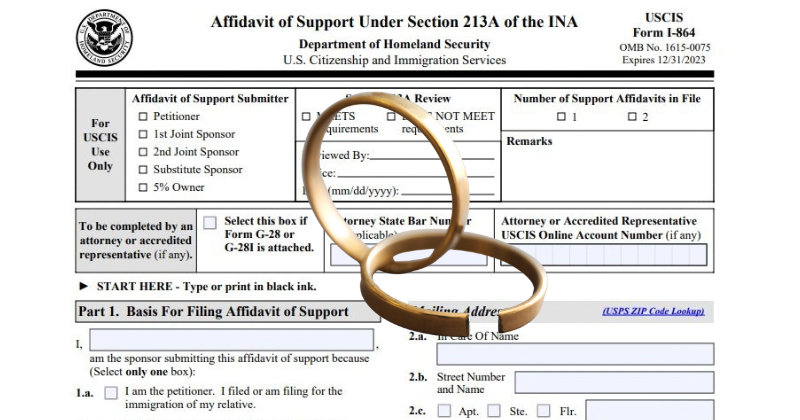
Yes, a U.S. citizen sponsoring an immigrant spouse signs a Form I-864, Affidavit of Support. A prenup does not cancel or override this. Rather, it is a federal contract you enter into with immigration when you file the form.