Can a spouse claim that a marriage was fraudulent? What happens if they do? Does divorce end I-864 financial support? It is essential to understand the I-864 affidavit of support after divorce and how it may impact your case.
At Odumlami Law Firm, we help clients through the toughest situations with confidence. That includes navigating your rights around Form I-864 divorce matters. Reach out to our nationwide immigration and New Jersey divorce and family law team now for a consultation.
Call us today at (973) 993-1900
What Is an I-864 Affidavit of Support After Divorce?
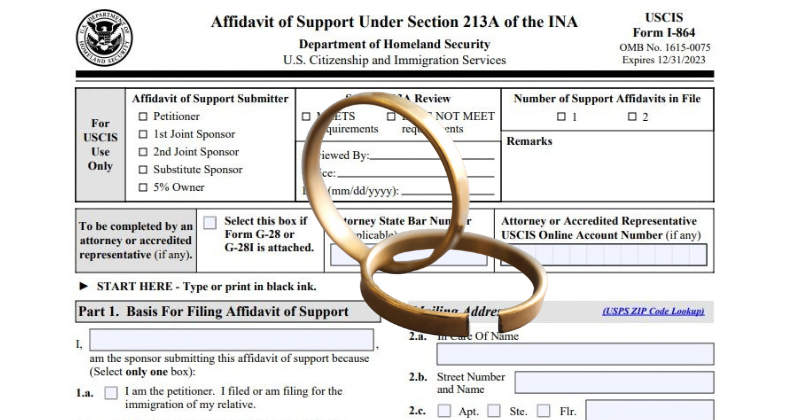
Form I-864, Affidavit of Support, is a binding contract signed by a spouse that shows the government that the person immigrating to the U.S. has adequate financial support and will not rely on public assistance while they are in the country. This is a legally enforceable contract signed by the financial sponsor of the person immigrating with the U.S. federal government.
Does Divorce End I-864 Obligations?
Divorce does not automatically end the sponsor’s obligations under Form I-864. Under this agreement, the financial sponsor promises the government that they will maintain the sponsored immigrant’s income at at least 125% of the Federal Poverty Guideline. There are limited exceptions. In most situations, the sponsor’s responsibility continues after divorce.
Events That May End the Obligation Under I-864
Sponsor responsibility after divorce may end in several situations. If any of the following apply, this can affect the sponsor’s requirement to maintain financial security.
- The individual becomes a U.S. citizen.
- The individual receives credit for 40 qualifying quarters of work. This is equal to about 10 years of working and reporting income to the government.
- The person is no longer a lawful permanent resident of the U.S. and permanently leaves the country.
- They are subject to removal but later receive a new adjustment of status based on a different affidavit of support.
- The person dies.
In addition, if the financial sponsor dies, that ends the future support obligations as well. But divorce on its own does not terminate this protection. Immigrant divorce can be complex. Speak with an experienced US immigration attorney about this process.
Many factors can complicate this process. For example, the 40-quarter rule has limitations. Quarters earned by the spouse may count, but quarters earned during a period in which the immigrant received some types of means-tested public benefits may not apply.
Difference Between I-864 Financial Support and Alimony
Form I-864 is a contract that requires a sponsor to support a green card holder at at least 125% of the poverty line. That is significantly different from alimony. Alimony is spousal support awarded at the time of the divorce based on marital need and standard of living. It’s governed by state laws. They come from different laws and should not automatically be treated as the same obligation.
An immigrant has the right to seek to enforce the affidavit in federal or state court. They may also request financial support, compensation for legal fees, and other available remedies. Moreover, government agencies may seek reimbursement from the sponsor if the sponsored immigrant receives certain means-tested public benefits.
Considerations for Joint Sponsors
A joint sponsor is a third person who provides financial support to cover an immigrant when the primary sponsor’s income does not meet the federal requirement. A joint sponsor’s obligation does not automatically end when the marriage ends. It also does not automatically go away if the petitioning spouse cannot provide support.
How to Navigate I-864 Enforcement and Financial Obligation
If you believe an I-864 financial obligation exists, or you are unsure of your rights after divorce, establish a consultation with an attorney to review your case. Be sure that you inform your divorce attorney (and that of the soon-to-be ex) about the signed I-864. All parties should review this document before negotiating alimony, support, or marital settlement agreements. Learning of an affidavit of support after divorce can complicate matters.
Let Our Team Help You Navigate Immigrant Financial Support After Divorce
“At Odunlami Law, we know that immigration law and divorce are both complex and life-changing. No single solution applies to every situation. WE also understand how important it is to get this right for you. Expect our team to investigate and create a plan that addresses your concerns. We fight to make sure your dreams become a reality,” says Ifeoma Odunlami.
Odunlami Law offers a combined perspective. Our nationwide immigration representation and select family law services in New Jersey give us a unique opportunity to understand all of your rights and obligations. We can help you better navigate federal immigration rules and obligations alongside divorce.
If you need help with an I-864 affidavit of support after divorce, or any other aspect of the process, contact us for immediate help. Call (973) 993-1900 for a consultation.
FAQs About Divorce and I-864 Financial Support
What are the obligations of a sponsor in an I-864 affidavit of support?
The financial sponsor agrees to support the immigrant and maintain their household income at or above the 125% Federal Poverty threshold. That may include providing money if the immigrant’s income falls below that level. It may also mean repaying public benefits paid to the immigrant. The sponsored immigrant can sue a person in court if they fail to meet these obligations.
What are some public benefits that may play a role in the 40 quarters of work eligibility?
If the immigrant uses means-tested public benefits, that could affect financial responsibility. This might include Medicaid, SNAP or food stamps, TANF, or SSI. The government agency can force the sponsor to repay these costs.
Who needs an I-864 affidavit of support?
Most family-based immigrations, including spouses, parents, and children, require it. Some employment-based immigrants may also need them. The sponsor must be a U.S. citizen or lawful permanent resident who is at least 18 years of age and has an annual income of at least 125% of the federal poverty guidelines.