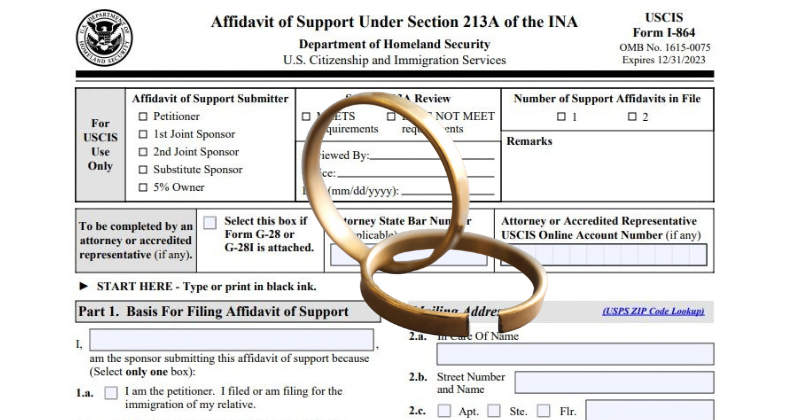

An annulment is a legal process that voids a marriage, treating it as if it never legally existed. Unlike a divorce, which ends a valid marriage, an annulment can completely erase the legal status of the union.
An annulment can seem like a strong alternative to divorce, but it is only available in specific circumstances. You cannot choose annulment simply because the marriage was short or difficult. In New Jersey, you can only obtain an annulment if you can prove a specific legal ground recognized by the courts. Understanding these grounds is the first step toward determining whether annulment is realistic for you.
The Legal Grounds for Annulment in New Jersey
To prevail in an annulment action, New Jersey law requires “clear and convincing” evidence—a higher standard than the “preponderance of evidence” used in most civil cases—of specific grounds including:
Fraud
Fraud is one of the most common grounds we see, but the courts define it narrowly. For a judge to grant an annulment, the fraud must involve an essential element of the marriage. We have to ask: Would you have agreed to this union if you had known the truth?
Common examples of essential fraud include:
- Entering the marriage solely to obtain immigration status, without any intent to build a real marital relationship
- Concealing the inability to engage in marital relations or, in some cases, the ability or intent to have children when that was central to the marriage
- Failing to disclose an existing marriage, which also raises issues of bigamy
- Hiding a pregnancy involving another person at the time of the marriage
- Concealing a serious criminal history that directly impacts the safety or expectations of the relationship
- Secretly intending not to live together or fulfill basic marital obligations
Misrepresentation
Closely tied to fraud, misrepresentation involves providing false information that induces the other party to marry. This goes beyond simple white lies. It must be a significant distortion of a fact that goes to the heart of the marital bond.
Lack Of Capacity
A marriage is a legal contract, and both parties must have the mental capacity to consent. If a spouse had a mental illness or was under the influence of drugs or alcohol during the ceremony to the extent that they did not understand the nature of the union, the marriage may be voidable.
Bigamy
If one spouse was already legally married when the second marriage occurred, the marriage is automatically void. Bigamy is one of the clearest grounds for annulment because it can be verified through official records, such as marriage certificates or divorce decrees.
Underage Marriage
The legal age for marriage in New Jersey is 18. If a party was underage and has not ratified the marriage (meaning they did not continue to live as a spouse after turning 18), an annulment may be an option.
Duress
If you were forced into the marriage through threats of violence or extreme pressure, the law says you did not give true consent. In these cases, the court can step in to nullify the union.
Incapacity
If a spouse was physically unable to engage in sexual relations at the time of the marriage and this condition was not disclosed, it may be grounds for annulment. This is legally distinct from infertility and typically requires credible medical evidence.
What Evidence Judges Look for in Annulment Cases
Annulment cases are evidence driven. Unlike divorce, where incompatibility or irreconcilable differences may be enough, annulment requires proof tied to a specific legal ground.
When you file for annulment, judges look closely at the type and quality of evidence you present. They want to see that your claim is grounded in fact, not just opinion or regret. Typical evidence includes:
- Documentation or witness testimony supporting the claim
- How quickly the issue was raised after discovery
- Behavior after learning the truth, including whether the parties continued the marriage
- Consistency in statements and evidence
Because the standard is high, even a strong personal story may not be enough without supporting proof.
How We Help
At Odunlami Law, we help you gather and organize this evidence so it meets the court’s high standard. One of our skilled annulment lawyers in Morristown will identify what documentation, witness statements, or expert reports are necessary, and ensure everything is presented in a way the judge can clearly evaluate.
We also guide you on timing and strategy. Acting quickly after discovering an issue can be just as important as the evidence itself. Our goal is to give you the strongest possible case for annulment while providing realistic guidance if annulment is unlikely.
Speak With a Family Law Attorney at Odunlami Law
Deciding how to end a marriage is both a personal and legal decision. If you are considering annulment, understanding the strict legal standards is essential.
At Odunlami Law, we are here to listen to your story, evaluate your options, and explain how the law applies to your situation. Whether an annulment is possible or a traditional divorce is the more suited route, we provide the advocacy you need to move forward.
Contact Odunlami Law today to schedule a consultation. Our experienced Morristown family law attorney team is ready to provide honest guidance and a clear roadmap for your next steps. If divorce is the appropriate path, we can also assist as your trusted Morristown divorce lawyer.