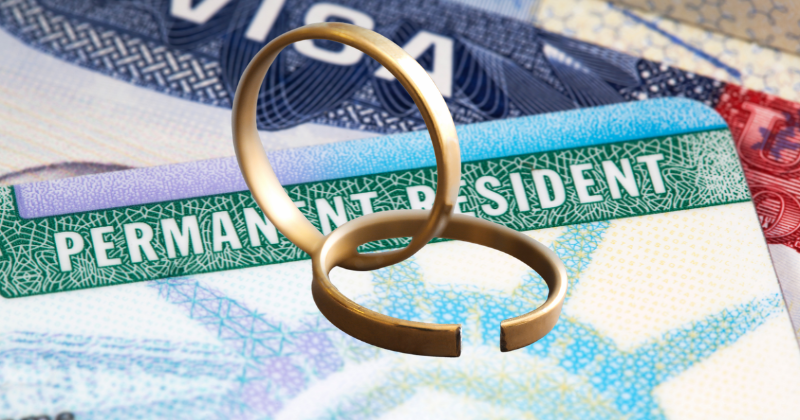
A divorce can affect your immigration status, depending on several factors. Your current status is the first thing we consider. Where you are in the application process can also affect the outcome. The best way to know what could happen in your situation is to speak to our divorce and immigration attorneys at Odunlami Law. Call (973) 993-1900 for a consultation to discuss the details of your specific divorce and immigration case.
What Happens to My Immigration Case If I Get Divorced? is one of our most frequently asked questions about immigration and divorce. When you hire Odunlami Law, our experienced attorneys review your case and provide guidance for your specific situation.
Is Your Marriage-Based Application Still Pending?
If your immigration application is still pending and has not yet been approved, your divorce could be detrimental. In these cases, your marriage provides a pathway to the U.S. A valid, ongoing marriage is required. You can expect:
- The application to receive a denial. You do not have a valid marital relationship. That means this petition is no longer eligible for sponsorship.
- You may be able to pursue an alternative immigration option. This may include employment-based visas, sponsorship from another qualifying relative, asylum applications, or protection under the Violence Against Women Act (VAWA), when applicable.
U.S. Citizenship and Immigration Services requires evidence of a genuine relationship. That means you must demonstrate joint bank accounts, leases with both names, and other evidence of a life built together. If you cannot do that because of the divorce, your application will not be approved.
Divorce If You Already Received a Green Card
If you already received your green card, the type of green card determines your next steps.
1. A Conditional Green Card
Most people receive a conditional green card when they get married. It applies to marriages that are under two years old at the time of approval. In this situation, you will need to apply to remove conditions:
- File a joint petition through Form I-751 with your spouse. This will remove conditions after those two years.
- Request a waiver. If you divorce, you must request a waiver and prove that the marriage was genuine. This also requires significant documentation to substantiate the claim.
You must file this request within the 90-day window before your conditional green card expires. The divorce does not automatically eliminate your status. However, you cannot file jointly.
2. A Permanent Green Card
A permanent green card is typical if your marriage is two years old or older at the time of approval. In this situation, if you have a 10-year green card, the divorce is less likely to impact your residency. You may not have to worry about losing your immigration status.
However, USCIS will review your case over time. When you apply for naturalization, they will closely review the case to ensure the marriage was valid at the time.
Getting Citizenship After Divorce
In these situations, it can be overwhelming to know what to do. You should not stay in an unsafe marriage, of course. But you do need a plan. An immigration attorney at our firm can provide that guidance.
You may still seek citizenship. You are married to a U.S. citizen. In this situation, you can apply for naturalization three years after being married. However, after a divorce, you must wait five years, not three, before seeking naturalization.
Dependent Visas
If you hold a dependent visa, such as an H-4 visa, your legal status depends on your spouse’s main visa. This is typically their H-1B. You lose your dependent status when the divorce finalizes. That means any associated work authorization you had is no longer valid.
In these cases, you must transition to another independent visa status in a timely manner or leave the country. Our immigration attorney can help you determine which solutions may apply.
Key Factors to Consider in Divorce and Immigration
Before you decide, ask a divorce attorney familiar with immigration law to review your case and clarify your legal rights and limitations. Here are some common concerns.
Domestic Violence and VAWA Requests
Some people may qualify for VAWA. This program enables abused spouses to self-petition for their own green card that does not require their abuser’s involvement. If you are facing domestic violence, reach out for immediate help. Then, allow our immigration attorney to help you qualify under VAWA.
Getting a Separation
Legal separation differs from divorce. However, even though it is not an official divorce, it may raise questions about whether the marriage is viable and legally recognized. If you are planning to divorce and choose separation first, work with our attorney to determine the best possible course of action. Legal separation does not automatically protect your status in the United States.
Divorce Does Not Terminate Financial Obligations
Another important factor in your immigration case after divorce is the set of rules governing financial obligations. If a U.S. citizen accepted financial obligations for you under an Affidavit of Support, USCIS will likely review any issues. That might include unpaid child support, for example, when assessing future applications.
The Affidavit of Support does not end with the divorce. It remains in place until you become a U.S. citizen, earn 40 qualifying quarters of work, or leave the country.
Read Our Divorce and Immigration FAQs: Top 10 Questions Immigrants and Their Spouses Ask Most
What to Do Now if You Are Considering Divorce
Navigating divorce and immigration is a complex legal process best left to an attorney with specialized experience in these areas. Odunlami Law Firm can help. Odunlami Law handles nationwide immigration cases and New Jersey divorce and family law cases. Call Odunlami Law at (973) 993-1900.
“Our priority is to make this journey as seamless and stress-free as possible for you,”
– Immigration Attorney Ifeoma Odunlami, Founder and Lead Attorney, Odunlami Law
FAQs About Divorce and Immigration
Does USCIS know if I get divorced?
They do not automatically know when you get divorced. However, the organization may discover it later through public records, background checks, or immigration filings.
Will USCIS just cancel my green card if I get divorced?
If you have a 10-year permanent green card, your divorce does not cancel your status. In all other cases, we encourage you to contact us.
How long is someone responsible for an immigrant after divorce?
That sponsorship remains in effect until the person becomes a citizen, earns 40 qualifying hours of work, or leaves the U.S.