
CALL US! 973 993 1900

Federal Litigation Immigration Lawsuit

83 Cases Filed

83 mandamus actions filed. Every single one moved forward.

All 50 States

We represent clients nationwide.

Group C Open Now

Join the group lawsuit forming now. Limited spots available.

June 15 Deadline

First batch files June 15, 2026. Spots are limited.

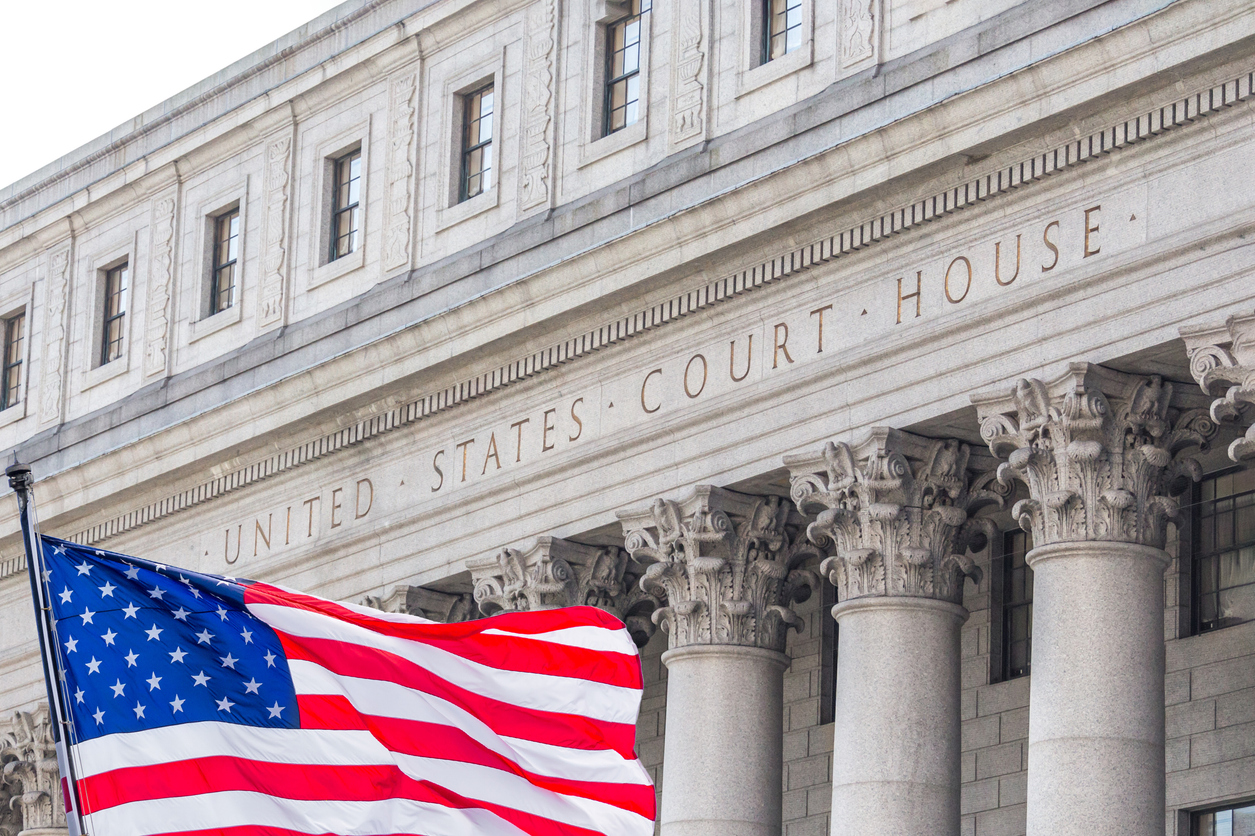
An American flag waving in the wind in front of a federal courthouse

Why Do You Still Need This Lawsuit?

 Reason 1: The ruling does not automatically move your case.

Vacating the policy means USCIS can no longer use the hold as a reason to freeze your case. It does not mean your case is next in line. USCIS currently has approximately 12 million pending applications. Your case goes back into that pile, without anyone specifically required to act on it, on any timeline, at any point soon.

Reason 2: The government is likely to appeal.

This administration has appealed every major immigration ruling it has lost. A stay or partial appeal could slow or reverse today’s ruling for months. The only clients guaranteed protection during an appeal are those who are named plaintiffs in active federal litigation, people with a judge actively watching their case.

Reason 3: Today’s ruling proves that filing works.

Courts are ruling in favor of immigrants. Again and again. Varniab v. Edlow. Bowser v. Edlow. Doe v. Trump. Karimi v. Mullin. Abdulraheemzai v. Noem. And now this. Every one of these cases was won because someone stopped waiting and started fighting. That is what federal litigation does. And today’s ruling is the clearest proof yet that it is the right strategy.

You followed every rule. You did everything right. And still, nothing.

Your life is on hold.

You can’t take the job you were offered. You can’t travel. You’re afraid to make long-term plans because you don’t know where you stand.

You’ve been told to just wait.

But you’ve been waiting. And waiting. And nothing is changing.

If any of this describes your situation, what we are about to tell you may change everything.

 

Federal Litigation: The Legal Path That Forces USCIS to Move

Most people don’t know this option exists. Most immigration attorneys don’t offer it because it requires a different skill set, more work, and specialized federal court experience.

When USCIS delays your case for an unreasonable amount of time, months, or years beyond their own published processing times, with no legitimate explanation, you have the legal right to file a federal lawsuit. Specifically, what’s called a Writ of Mandamus.

A Writ of Mandamus is a federal court order that compels a government agency to perform a duty it has unreasonably failed to perform. In plain language, it forces USCIS to decide on your case.

The moment we file, the federal court is watching. USCIS can no longer ignore your case. The U.S. Attorney’s office is involved. The clock starts running. Most mandamus actions resolve within 30 to 90 days, because USCIS would rather adjudicate than defend their delay in front of a federal judge.

Your case is no longer invisible.

The moment we file, USCIS is legally required to respond. A federal judge is overseeing the timeline. Your case goes from “pending indefinitely” to “actively being reviewed.”

You may receive work authorization while the case is pending.

Many clients who file federal litigation receive interim employment authorization while the case moves through the court system. A legal job. Legal income. Something to stand on while we fight.

You are protected from deportation and removal while the case is active.

Filing creates a legal record that your case is being actively contested. This offers meaningful protection during the litigation period.

Filing does NOT hurt your immigration case. Not even a little.

It is illegal for the government to retaliate against you for exercising your right to sue in federal court. If anything, filing gets your case moving faster.

83 people. 83 cases moved.

Eighty-three individuals who filed mandamus actions through Odunlami Law had their cases moved forward. Not some of them. All of them. When you take the government to court, the government responds.

Physicians filed as a group. They won.

A group of physicians whose cases were frozen by the USCIS adjudication pause filed a collective federal lawsuit. They won an exemption. The government was compelled to act. This is what collective action at the federal level can do.

JUNE 5, 2026: A federal judge just ruled the hold unlawful and vacated it.

Chief U.S. District Judge John McConnell in Providence, Rhode Island found that USCIS’s blanket hold on immigration applications for nationals of the 39 affected countries violated federal law. He vacated all of it. This ruling validates exactly what our attorneys have been arguing. Federal courts are on the right side of this issue. And named plaintiffs in active litigation have the strongest protection when rulings like this are appealed.

USCIS currently has approximately 12 million pending cases.

The hold being lifted does not move your case to the front of the line. It puts your case back into a 12-million-deep pile with no individual attention, no deadline, and no legal obligation for USCIS to prioritize you. Federal litigation changes that; it puts a federal judge’s attention on your specific case.

Why We're Filing as a Group and Why That Benefits You

We are not filing individual lawsuits. We are organizing a group multi-plaintiff federal action, with dozens of clients with stalled cases filing the same challenge together.

The legal strength is greater.

When one person sues, the government argues it’s a unique outlier. When dozens of people from across the country bring the same challenge, it becomes impossible for the government to call it a coincidence. It exposes a systemic problem. Judges respond differently.

The cost is dramatically lower.

Individual federal litigation costs $5,000 to $10,000 or more. We share resources across the group, which means you gain access to high-level federal litigation at a fraction of what it would cost to file alone.

THE FEE: $1,500 — flat. No hidden fees. No installments.

This filing is specifically for nationals of the 39 countries affected by the USCIS adjudication pause. You may qualify if you meet ALL of the following:

Check every box that applies to you:

— You are a national of one of the 39 affected countries listed below.

— You are physically present in the United States.

— You have a pending application at USCIS — Green Card (I-485), Work Permit (I-765), Family Petition (I-130), Naturalization (N-400), Asylum (I-589), Removal of Conditions (I-751), or any other USCIS benefit application that has been placed on hold or delayed.

— Your case has received no meaningful update for 6 months or more, no interview, no decision, no explanation.

— You are not currently a plaintiff in a similar federal mandamus action for the same application.

This lawsuit covers nationals of the following 39 countries currently subject to the USCIS adjudication pause:

Afghanistan — Angola — Antigua and Barbuda — Benin — Burkina Faso — Burma (Myanmar) — Burundi — Chad — Cote d’Ivoire — Cuba — Republic of the Congo — Dominica — Equatorial Guinea — Eritrea — Gabon — The Gambia — Haiti — Iran — Laos — Libya — Malawi — Mali — Mauritania — Niger — Nigeria — Palestinian Authority (Travel Document Holders) — Senegal — Sierra Leone — Somalia — South Sudan — Sudan — Syria — Tanzania — Togo — Tonga — Turkmenistan — Venezuela — Yemen — Zambia — Zimbabwe

Common case types we have moved through federal litigation for clients from these countries:

— Green card (I-485) pending 2+ years

— Employment-based adjustment of status pending 1+ years

— Naturalization (N-400) applications pending 12+ months

— Employment Authorization (I-765) pending 6+ months

— Removal of Conditions (I-751) pending 2+ years

— Cases specifically placed on hold under USCIS Policy Memorandum PM-602-0192 and PM-602-0194

The Court Just Proved You Were Right. Now Make Them Move on Your Case.

Today, a federal judge confirmed what you already knew: what USCIS did to your case was unlawful.

But that ruling does not move your file. It does not put your name at the top of anyone’s list. It does not guarantee that USCIS will reach your application within months or years.

What moves your case is what has always moved cases: legal pressure, applied directly to your specific application, by attorneys who know how to make federal courts pay attention.

That is what we are building right now in Group C. And courts are ruling in our favor.

If you have read this far, you already know what you need to know.

Frequently Asked Questions

Answers to the questions we hear most often.

Not necessarily, and this is critical to understand. The ruling vacates the policy that froze your case. That is a major legal victory and exactly what we have been arguing. However, USCIS has approximately 12 million pending applications. Lifting the hold puts your case back into active processing, but not to the front of the line. Without specific legal pressure directed at your individual case, your application will sit in that backlog without any obligation on USCIS to prioritize it over anyone else’s. Federal litigation through a mandamus action is how you create that pressure.

No. Filing creates legal accountability that forces USCIS to review your case, often moving faster than years of waiting.

A Writ of Mandamus is a federal court order that compels a government agency to perform a duty it has unreasonably failed to perform. In immigration, this means forcing USCIS to make a decision on your pending application.

Yes. This specific group lawsuit is for nationals of the 39 countries currently subject to the USCIS adjudication pause under Policy Memorandums PM-602-0192 and PM-602-0194. If you are not from one of the 39 listed countries, contact us directly and we can discuss what other legal options may be available for your situation.

The fee is a flat $1,500. This covers your participation as a named plaintiff in this multi-plaintiff federal action. Individual mandamus lawsuits typically cost $5,000 to $10,000; the group structure is what makes this accessible. Full payment is required at signing. There are no payment plans and no refunds once you join the batch.

Your full legal name will appear on the federal court filing. Sensitive information, such as your alien registration number, will be redacted. By joining, you consent to your name appearing on publicly accessible court documents.

Once your eligibility is confirmed and the retainer is signed, our team will guide you through exactly what to provide.

What Happens When Clients Take Action

Real experiences from clients we have represented.
"My case had been stuck for over two years. I had given up hope. After filing, the government was forced to act, and my case finally moved. I wish I had done this sooner."
Client, Family-Based Petition (Country withheld for privacy)
"We had been separated from our child for more than 18 months. Federal litigation was the only thing that actually got the government to respond. We are together now."
Client, Immigrant Visa / Consular Processing
"My work authorization was stuck in administrative processing for over a year. After filing, the case was resolved within months. The process was straightforward and the team kept me informed every step of the way."
Client, Work Visa / Employment Authorization
Scroll to Top
Skip to content